
Razer Goes All-In on AI & Immersive Experiences at CES 2026
The future of gaming is filled with comforts and conveniences

CES (the annual Consumer Electronics Expo held in Vegas) is all about innovation, and year after year, Razer strives to deliver concepts that tweak the way we play. At CES 2025, I was largely critical of Project AVA, the brand’s in-house AI companion, and remained wary of Razer’s growing integration of AI. This year’s expo piqued my interest as Razer’s showcase reassured that, while artificial intelligence remained a focus, the brand was still staying close to its roots as a gaming hardware and accessories company.
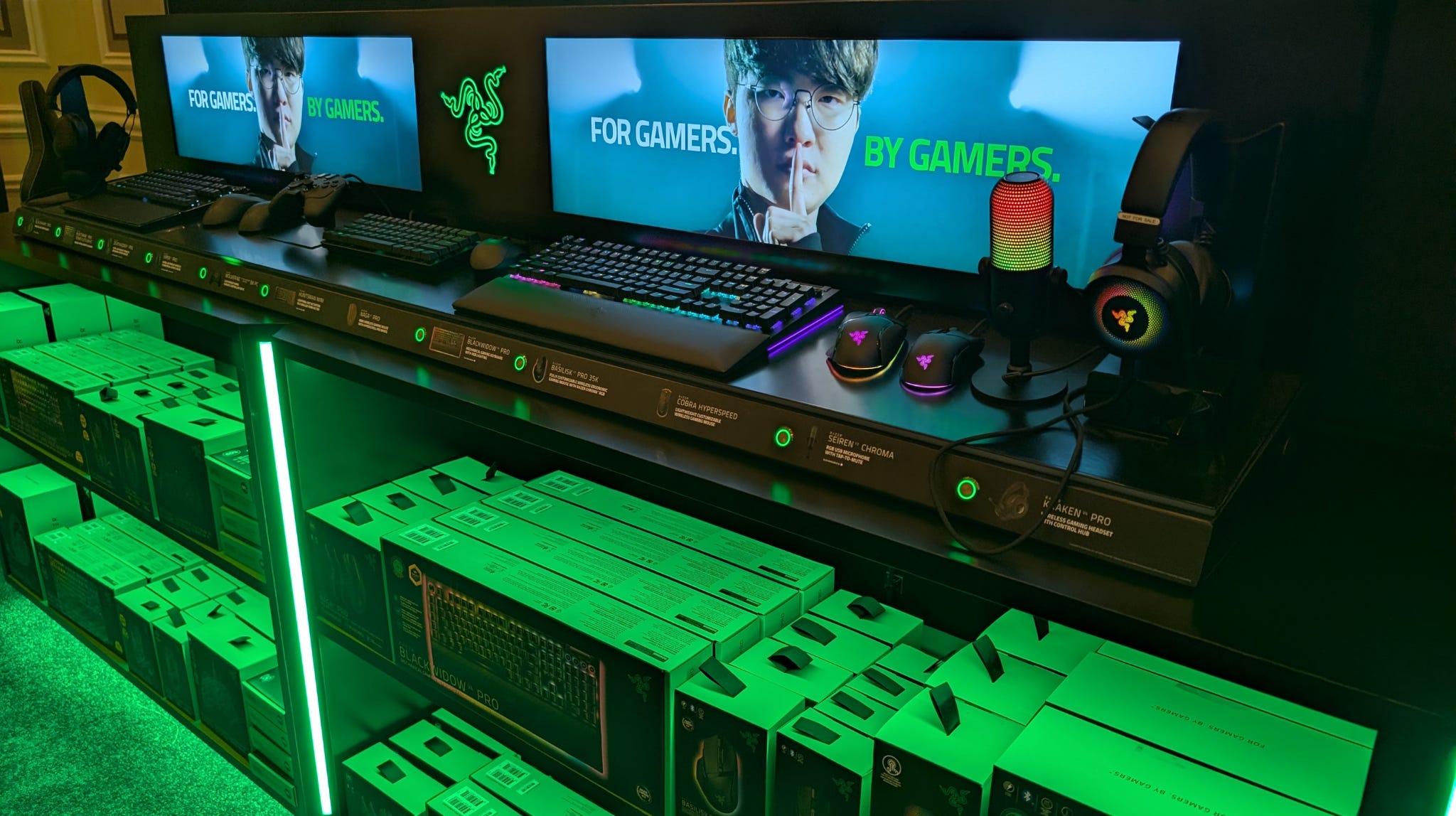
Arriving at the designated meeting room in the Venetian, the layout was quite reminiscent of last year’s. The outer walls were a gamer’s paradise, lined with peripherals from the company’s ever-growing lines of keyboards, mice, and headsets. It was an RGB haven, and though I initially refrained from testing the clickiness of each keyboard, I did return after my tour to find that perfect typing feel I’ve been longing for. Spoiler alert: It’s the Huntsman V3 Pro.
Alas, I wasn’t there to shop (Okay, so I partly was), and there was plenty of exciting new tech to see, including three items I was particularly interested in seeing.
Step Aside Smart Glasses
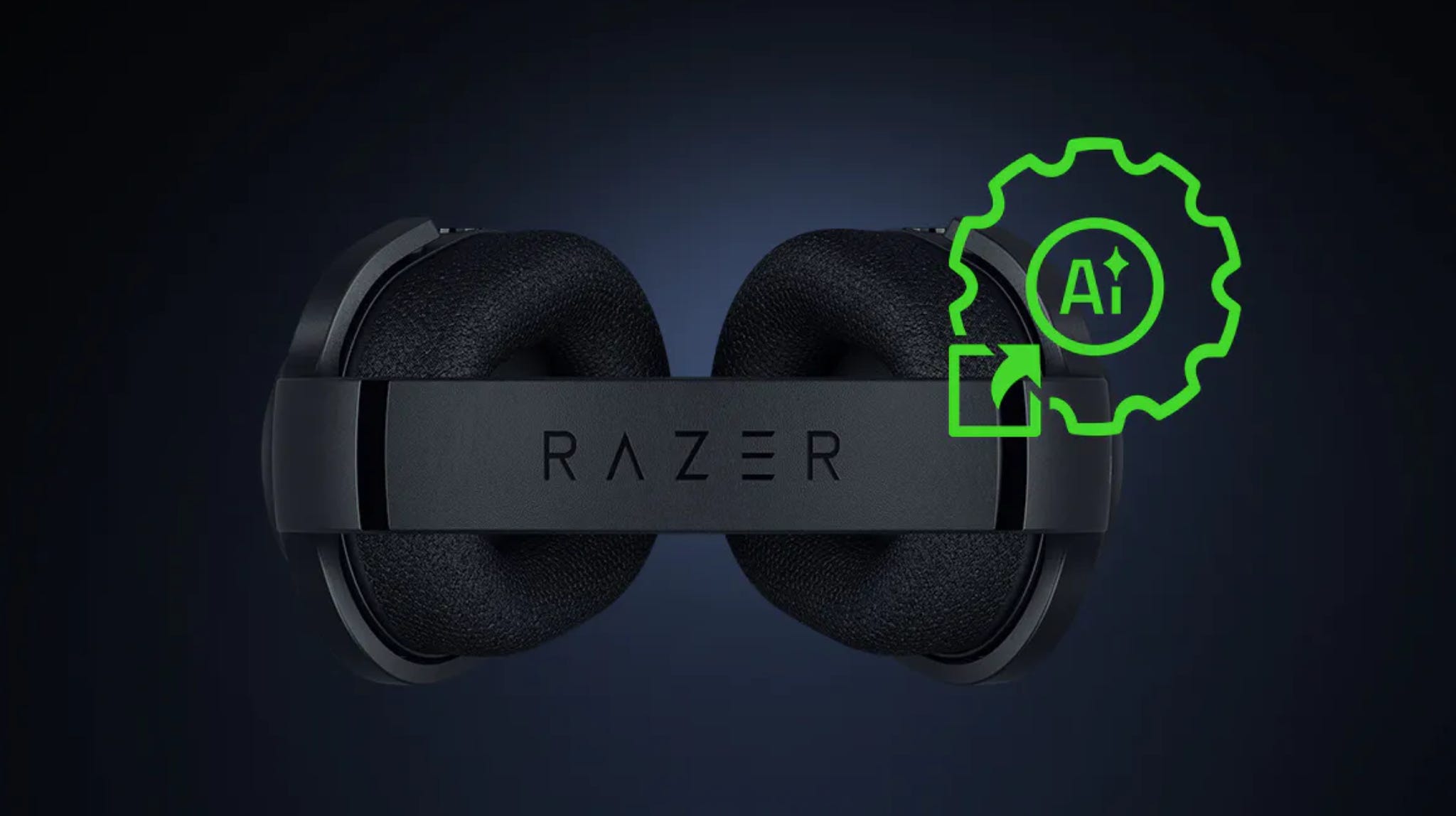
At the center of everything was Project Motoko, the current designation for Razer’s future wearable AI companion. Think the functionality of smart glasses in a very familiar form factor that better simulates the first-person view and caters to a broader audience. Equipped with two front-facing cameras and powered by Snapdragon, the smart headset sees the world as you do, albeit with a slightly wider focal area.
Traveling abroad and need a sign translated? A simple button press and a clear prompt virtually eradicate the language barrier. The demo at CES used a Japanese cafe menu, and the AI did more than just translate. When asked for the simplest way to order matcha in the local language, the AI nearly instantly responded with a few options in what I have to trust was clear, fluent Japanese. Bringing the demo closer to home, Motoko proved useful when presented with a table full of ingredients. It’s all about asking the right question. In this case, it was “What can I make with these ingredients?” The cameras detected what was present, and the AI quickly developed a viable dinner plan.
Granted, this is what AI already does for us. Motoko just changes how we keep these incorporeal companions at our side. Smart glasses have been around for a spell, but they come with significant battery limitations, are often incompatible with strong prescriptions, and aren’t all that private. Using a larger form factor allows Razer to improve the battery life tenfold, and the cushioned ear cups ensure no one knows you have someone whispering in your ear. Motoko is also AI agnostic. Whereas Ray-Ban’s Meta AI glasses work only with Meta AI, Motoko lets users choose their platform.
Project Motoko may be Razer’s answer for a more universal AI companion, but it hasn’t forgotten its customer base and primary market. Project AVA returned this year with a quirky upgrade that felt very true to the brand.
Razer Gives Project AVA a New Body
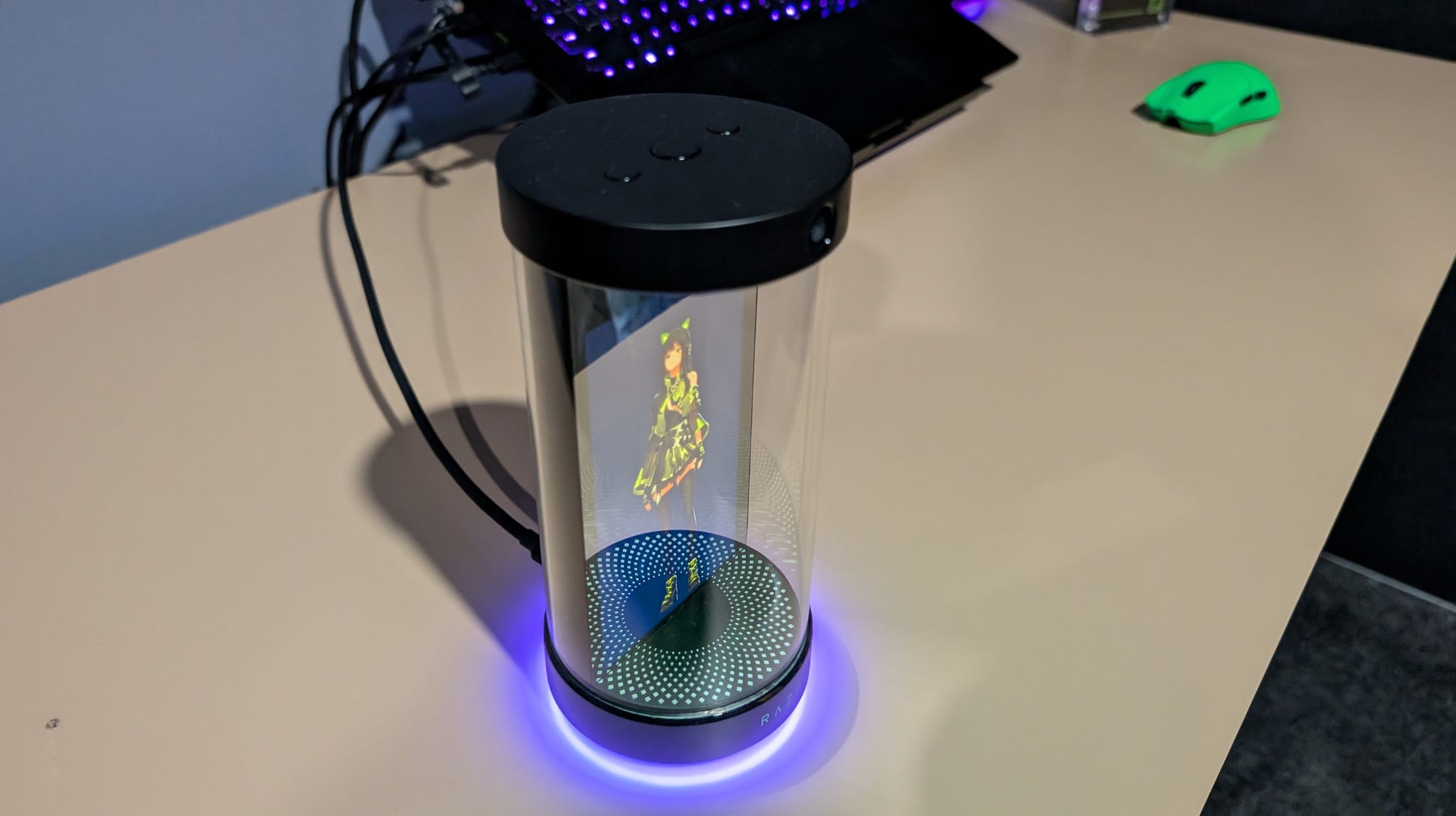
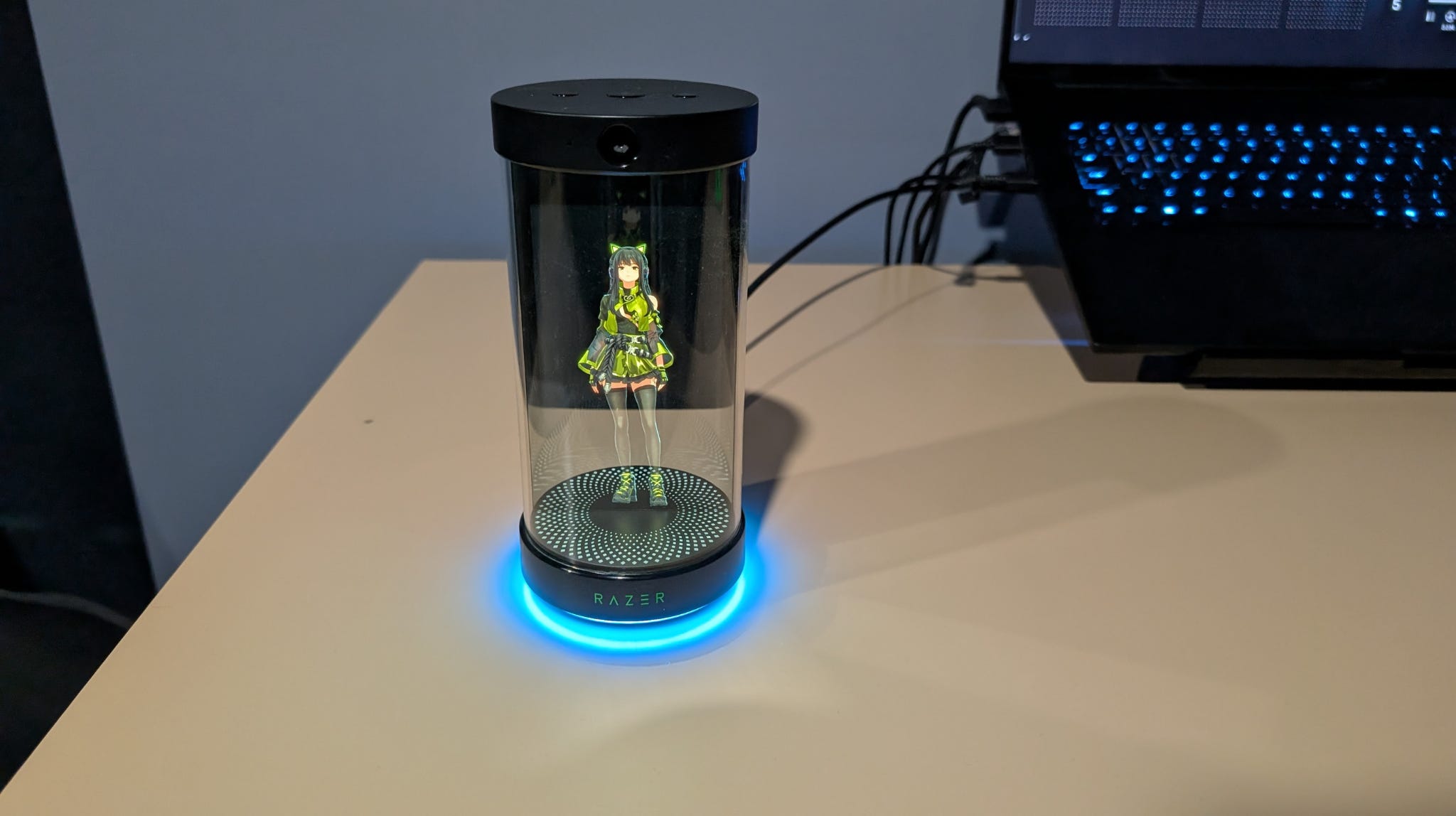
Since its reveal at CES 2025, the Project AVA AI gaming companion was depicted as a swirl of green fitting for Razer’s branding. This year, even before its official launch, AVA received an upgrade in the form of a desktop hologram. At launch, expected sometime in Q3 or Q4 of 2026, users will choose between one of 5 companions to join them in their gaming space. From a quirky e-girl, complete with kitten ears, to a smooth-talking hunk, there’s a 5.5-inch avatar for almost everyone. If none of the digitized characters fit your aesthetic, there’s always the pulsing wisp to revert to.
AVA’s holograms come to life on an LED panel and feature the expected Chroma RGB, a front-facing HD camera, and dual far-field array microphones. Razer partnered with Animation Inc. to bring each character to life, and with eye-tracking and dynamic facial expressions coupled with AVA’s sassy personality, there is an eerie realism to them. One that, I’m sure, some subsect of gamers will find a way to pervert.
During the demo, Razer’s rep (who was as excited about this reveal as he was about AVA’s first showcase in 2025) confirmed the company is hoping to allow for more personalized holograms post-launch. Want to be joined by your favorite four-legged friend? The vision is to allow users to upload an image that will then be converted into a hologram.
Yes, it is essentially a toy for Razer’s AI companion. Yes, it will drum up a ton of controversy, especially since its current iteration uses xAI’s Grok. However, there is a market out there for it, especially when Razer opens it up to support other AI platforms.
Project Madison Emphasizes Comfortable Immersion
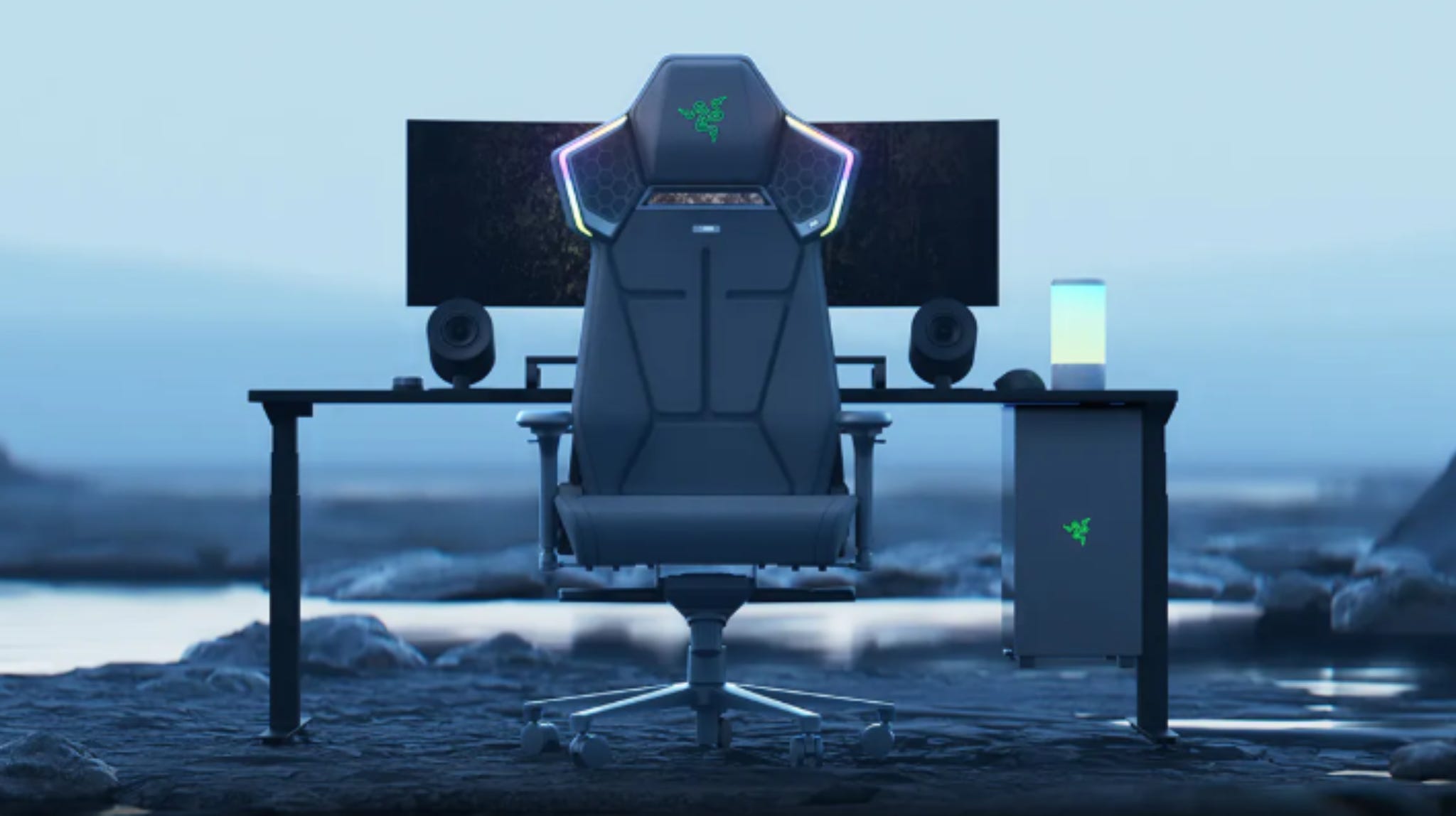
My favorite Razer demonstration, Project Madison, steps away from AI and focuses entirely on pulling players into the game. Combining concepts like the Razer’s Clio and Freyja into a high-end furniture line, Madison is a three-in-one ergonomic gaming chair. Equipped with built-in Sensa HD Haptics and speakers compatible with THX Spatial Audio, the Chroma-enabled chair enhances immersion.
I enjoyed the reactivity of the haptic sensors, which were responding to specific actions in Marvel Rivals, but it’s the speakers that really sucked me in. The clarity and bass were not at all what I expected coming from the shoulders of a chair. As the Razer rep played through Rivals’ tutorial, I could accurately track opponents moving nearby via spatial audio, a necessity in competitive gaming. Madison’s speakers work on their own or pair with 5.1 or 7.1 surround sound to really bring your favorite games to life.
Comfort is still a concern for Razer, and this tech-heavy chair features the expected lumbar adjustments and 152-degree recline. While much of the company’s chair lineup is a peel-resistant leather, Madison sports a dual-density cold-cured foam cushion. The foam felt durable and just stiff enough that it should stand up to heavy use.
Razer was a little coy about an estimated release date, though the aim is to sneak it out before the end of 2026. As for price point, there wasn’t even a ballpark, but considering the $649 cost of the Iskur V2 NewGen, you should probably expect closer to the $800 to $900 range for all the tech built into Madison.
2026 Could Be a Bad Year for Your Wallet
Full disclosure, if you don’t already know this about me, I’m a sucker for new gaming tech. I have no doubts that Project AVA’s hologram companion is an absolute gimmick, but I already forked over the $20 for the pre-order. In my defense, I should keep up with the latest in gaming peripherals and gadgetry, but I would be lying if I said I wouldn’t have purchased it regardless, out of curiosity.

As intrigued as I was by what AVA and Motoko brought to the table, the speakers on Project Madison instantly sold me on the chair. If you could hear just how awful the speakers are on the HP Omen monitor I’m using, you’d probably understand how sound could be such a big selling point.
the Ava one has me interested. seems like an iot moment for ai. nice batch of updates here, thanks a ton.
I'm always sceptical of Razer outside of the usual mice and keyboards, I had a Razer headset in 2024 and it was legitimately the worst I've ever owned: crappy audio and snapped in half through normal use which has never happened to me before or since.
I'm glad you can upload an avatar, sorry Razer but I cannot as a 25 year old man who hopes to meet a lady one day be seen with an anime girl on my desk.